The Bruker M4 PLUS micro-XRF is a versatile device with numerous applications and analytical modes. The device uses an X-ray beam, focused to a point size of 20 microns using polycapillary optics, which is used to excite electrons to higher atomic orbitals within the target material. As these electrons decay back to their ground state, X-rays characteristic to each element are released, which are then measured and displayed as an energy spectrum showing the number of counts per second between 0 and 40 keV.
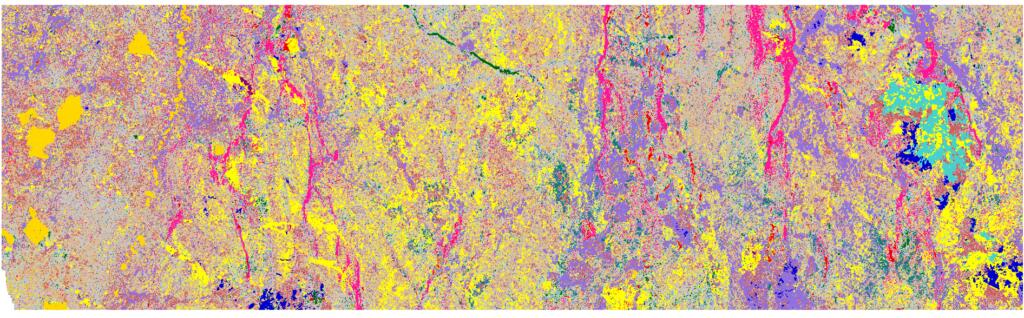
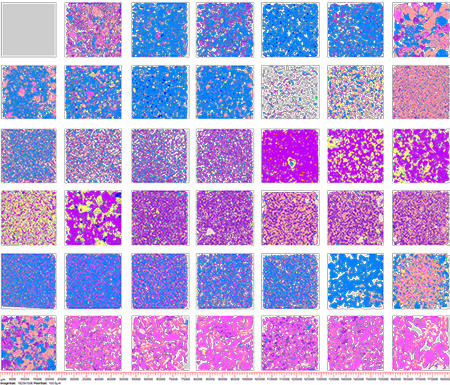
For mineralogical characterisation, identification is determined by the spectral response of each mineral grain, which is dominated by the major stoichiometric composition (and minor substitutional components). Mineral spectra are acquired via mapping mode and matched to minerals in a known library.
The M4 provides highly repeatable elemental measurements at each spot (low RSD under consistent conditions), for all elements with atomic number from Na (Z=11) and above.
About Micro XRF
Micro X-ray Fluorescence spectroscopy (μXRF) is a rapid and non-destructive technique requiring little to no sample preparation. The Bruker M4 PLUS’ 19x16cm stage allows for larger samples, such as drillcore and slabs to be analysed, as well as RC chips, Heavy Mineral Concentrates (HMCs) and thin sections.
RC Chip Anaysis
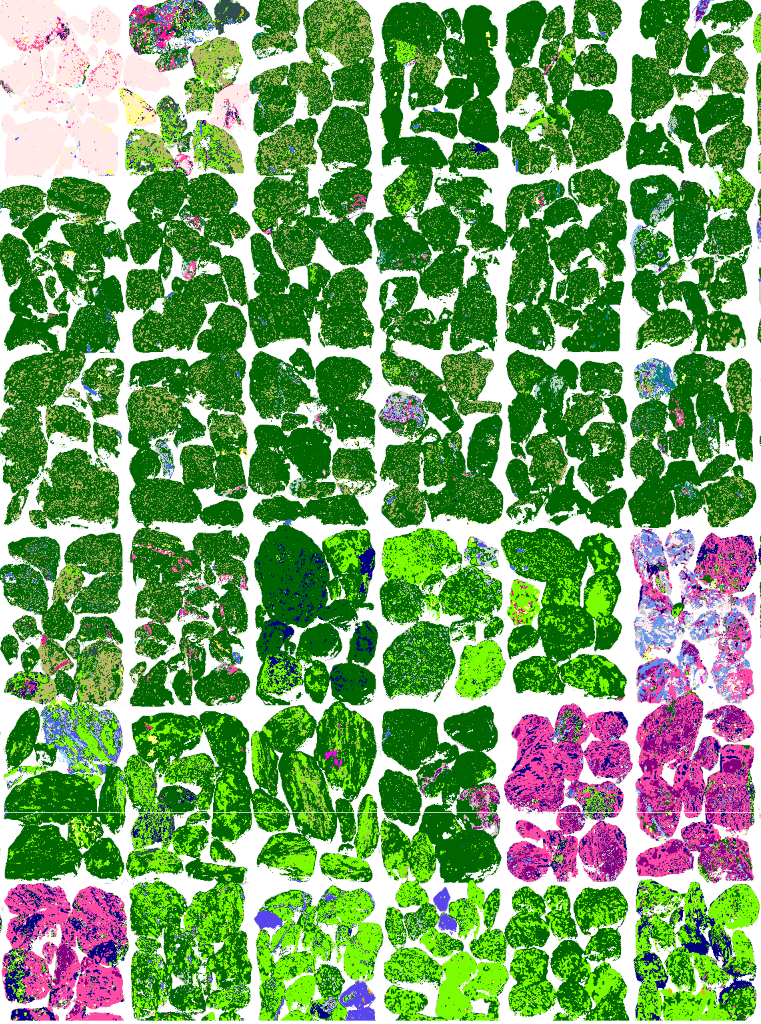
PSS provides automated μXRF scanning of RC chip trays to deliver rapid mineralogical insights from drill samples. Our spectral mineralogists build customised mineral libraries for each project, incorporating target minerals and allowing classifications to be updated as interpretation evolves.
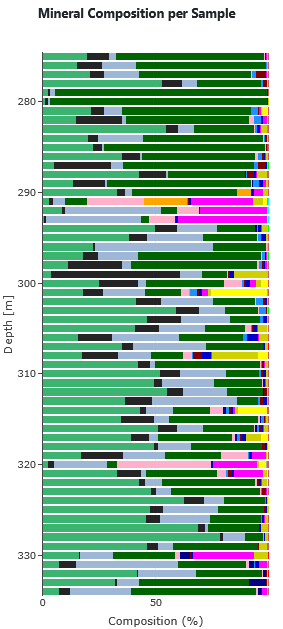
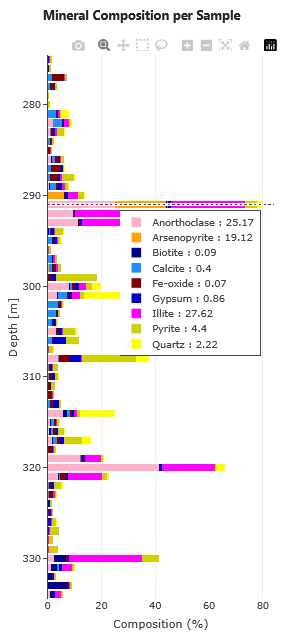
Results are delivered through our online portal and exportable CSV files, with mineral data linked to sample depth to visualise mineralisation trends throughout the drill hole with a downhole viewer.
Drill Core & Cut Slab Analysis
PSS provides μXRF and spectral analysis of drill core and cut slabs, delivering high-resolution mineralogical and geochemical datasets. Custom mineral libraries are developed for each project to identify alteration, mineral assemblages, and target minerals.
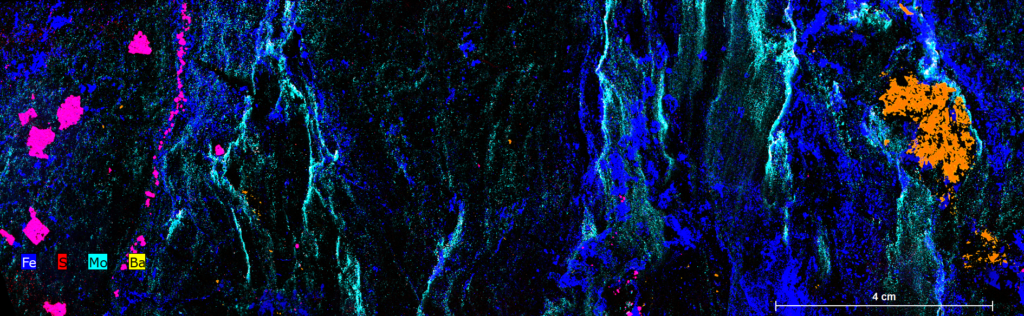
Results include mineral maps, elemental distributions, bulk mineralogy summaries, raw spectral data, elemental maps, target grain size information, and mineral association data for commodities of interest. Data is delivered through our online portal and exportable files, supporting geological domaining, mineralisation trend analysis, and exploration targeting.
Heavy Mineral Concentrates
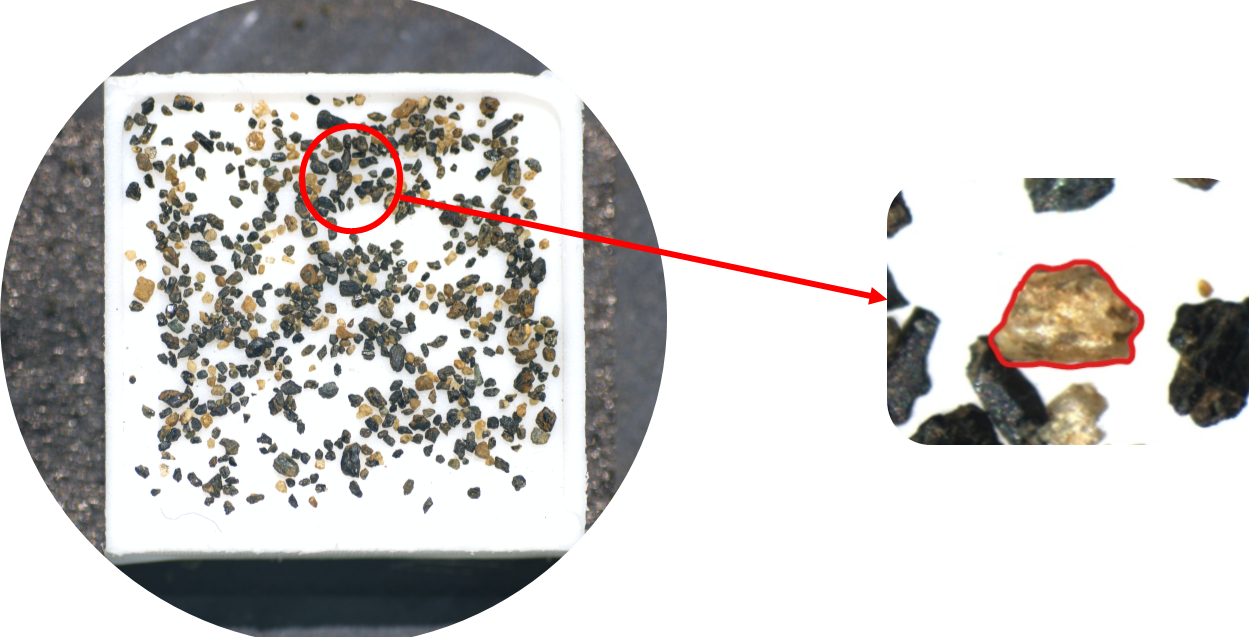
PSS provides high-throughput HMC analysis using automated sample preparation, robust LIMS-based sample tracking, and unattended μXRF scanning. Each sample is prepared as a representative single-grain layer and analysed using our M4 μXRF systems, enabling scalable daily throughput for both small and large campaigns.
Our proprietary machine-learning grain detection software identifies individual grains and supports grain-by-grain reporting of mineral composition, dominant mineral, shape, size, colour, fluorescence response, and elemental spectra.
Results are delivered through our online viewing portal, including high-resolution sample images, interactive mineral maps, bulk mineralogy and chemistry summaries, grain counts, scanned fraction weights, and exportable CSV files. Raw data files, including pixel-level CSV/JSON outputs and Bruker M4 BCF files, are also provided for future visualisation and review.
Quality control includes duplicate samples and reference materials, with the reconstituted scanning fraction returned in barcoded packets for complete traceability.